• Home
  • About
  • Services
  • Rate, Hours & Location
  • Contact

Wendy S. Rhyason, MA Counselling Psychology

Counsellor & Life Coach

Price of Gossip

February 18, 2015 by Wendy Rhyason

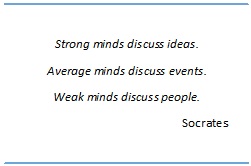
Have you ever been the subject of gossip? Gossip is idle talk or a rumor that is discussed without consideration or thought to the potential negative effects upon the person being discussed.  Often the person gossiping does so without thinking about the negative effect they might have on others. There are various reasons why people gossip:

  • a need to fit instrong
  • a need to vent or validate their perspective
  • a need to feel superior
  • a need to say they have been wronged
  • a need to get support, or rally spectators
  • for fun or excitement
  • a need to avoid conflict or avoid resolution

All of these reasons to gossip are destructive to relationships and to you personally. Before you gossip consider these consequences:

  1.  YOU REAP WHAT YOU SOW – If you’re gossiping about someone else, you can rest assured that, at some point, someone will also gossip about you.
  1. IT ISOLATES YOU – Ultimately, gossiping will isolate you. People will still talk to you and you’ll still have friends, but you’ll be known as the person that gossips.
  1. NO ONE TRUSTS YOU – No one is going to trust you. Even your best friends might hesitate before sharing anything serious with you, especially if they fear you’ll gossip about it.
  1. YOU HURT OTHERS – One of the worst effects of gossip is the pain it causes others. Put yourself in their place, and remember a time when you’ve been hurt by gossip.
  1. IT TARNISHES YOUR INTEGRITY – When you gossip your integrity is tarnished. People definitely won’t trust you, they’ll certainly be hurt by your actions, and those you love may even have difficulty believing anything you say.
  1. IT SPREADS LIES – Many times, a story gets exaggerated entirely out of proportion. By gossiping and spreading the rumor, you’re lying as well.

Gossip Destroys Relationships

If you’ve ever been the target of gossip and untrue rumors, you know how hurtful it is. Whether something is true or not, knowing that people are talking about you is painful. You feel embarrassed, humiliated, and ashamed, even if you’ve done nothing to be ashamed of in the first place. Does that mean you can never discuss another person with others? No, but be very careful of your motives. When you are talking about another person but not gossiping, there is an effort to understand and maintain the other person’s wellbeing and integrity. A good measure is to ask yourself – if the person walked into the middle of this conversation would there be any embarrassment about what is being discussed?

Gossip is harmful and destroys relationships.  When you are tempted to gossip about others, remember the pain you felt when people gossiped about you. Remind yourself about the cost to you personally if you engage in gossip. Refuse to participate in something that tears other people down.

To learn less hurtful and more effective ways to express your feelings or if you are the subject of gossip, I am here to help you deal with your emotions.  Please contact Edmonton Counsellor & Life Coach Wendy Rhyason at wendy@wrhyason.ca or phone or text 780-289-8235.

Edmonton Counsellor & Life Coach – Wendy Rhyason, MA Counselling Psychology

Filed Under: Betryal, Gossip, Unforgiveness, Unhealthy Relationships

Forgiveness

February 10, 2015 by Wendy Rhyason

Reclaiming Your Personal Power

As a counsellor I have seen many people struggle with bitterness and resentment. One of the most dangerous things a person can do is to hold onto these emotions.  Clinging to bitterness and resentment has far-reaching and often unexpected consequences.  These emotions impact the mind and spirit, and affect people physically.

Unforgiveness Can Cause Health Problems

When people are bitter, they live with tension and anxiety which affects everything from muscles to chemical balance in the brain.  Over time, the body is weakened. Writing in the journal Social Psychiatry and Psychiatric Epidemiology in 2010, researchers reported that those who held grudges had higher rates of heart disease and cardiac arrest, elevated blood pressure, stomach ulcers, arthritis, back problems, headaches, and chronic pain than those who didn’t share this tendency.  When you dwell on grudges, the stress you carry damages the body and may compromise your immune system, making you less resistant to illness.  Forgiving and releasing anger toward people that have hurt you is the course of action recommended by most psychologists.

Sometimes it is very hard to forgive because we naturally want revenge for the things we have suffered.  Forgiveness seems to go against our sense of what is right and fair.  So we hold on to our anger, punishing people over and over again in our minds for the pain they’ve caused us.  Unfortunately, as long as you refuse to forgive, you are still hooked to that person and you are chained to your past, bound up in your bitterness.

Forgiveness Does Not Mean Forgetting

Many people fail to forgive because they don’t understand what it really means.  When you forgive, you do not gloss over or deny the seriousness of an offense against you.  Forgiveness does not mean forgetting, nor does it mean condoning or excusing offenses.  Though forgiveness can help repair a damaged relationship, it doesn’t obligate you to reconcile with the person who harmed you, or release them from legal accountability.  Forgiveness is a conscious, deliberate decision to release feelings of resentment or vengeance toward a person or group who has harmed you, regardless of whether they actually deserve your forgiveness.

Benefits of Forgivenessforgivenss

Research over the past few decades has revealed enormous personal benefits to forgiveness. According to that research, forgiveness will:

  •  Make you happier
  • Improve your health.
  • Benefit you spiritually and emotionally.
  • Bring peace of mind and free you from corrosive anger.

While there is some debate over whether true forgiveness requires positive feelings toward the offender, experts agree that it at least involves letting go of deeply held negative feelings.  It empowers you to recognize the pain you suffered without letting that pain define you, enabling you to heal and move on with your life.

Don’t wait until you feel like forgiving. It will never happen.  Living a full, healthy life is the best revenge.  Instead of focusing on your wounded feelings, which gives power to the person who caused you pain, make a choice to forgive and reclaim your personal power.

If you need help with forgiveness, please contact Edmonton Counsellor & Life Coach Wendy Rhyason at wendy@wrhyason.ca or phone or text 780-289-8235.

————————————————————————————————————–

Edmonton Counsellor & Life Coach – Wendy Rhyason, MA Counselling Psychology

Filed Under: Bitterness, Forgiveness, Resentment, Unforgiveness

Copyright © 2026 · Lifestyle Pro Theme on Genesis Framework · WordPress · Log in