• Home
  • About
  • Services
  • Rate, Hours & Location
  • Contact

Wendy S. Rhyason, MA Counselling Psychology

Counsellor & Life Coach

To Err is Human

January 26, 2015 by Wendy Rhyason

Wendy S Rhyason – Edmonton Counsellor & Life Coach

————————————————————————

Reflecting on the Past Year

The beginning of the New Year is often a time for reflection. As you look back over the past year you may feel good about accomplishments or you may feel regret, pain or sadness over mistakes made. When reflecting on mistakes and painful experiences, some people approach it in unhealthy ways. They deny any responsibility and avoid self-examination by blaming others for the problem. How do you react when you make a mistake?err Do you put the blame on someone else? Do you deny it and say it wasn’t really a mistake at all? Or do you own it, take responsibility, learn from it and make changes.

Each time you make a mistake, whether on purpose or accidentally, you have an opportunity to learn a valuable life lesson. When you try to be perfect, blameless and flawless, you miss out on what mistakes can teach you and you set yourself up for failure.

We Learn By Making Mistakes

Humans learn by making mistakes. As children we learn to walk by falling down. The most successful people made many mistakes and learned from them. Thomas Edison made 1,000 attempts to invent the light bulb before he found the design that worked. The Wright Brothers made numerous attempts to fly their plane before they finally got it right. Oprah Winfrey was fired from her job as a television reporter because she was “unfit for TV” but went on to become a successful media giant. What if these people refused to acknowledge their mistakes and learn from them?

The famous Irish novelist and poet James Joyce said, “Mistakes are the portals of discovery.” Examining mistakes should not lead to self-recrimination. You’re human and as long as you are breathing you will make mistakes. The purpose in admitting and examining your mistakes is to learn from them and make necessary changes.

When you make a mistake ask yourself the following questions:

  1. What could I have done differently?
  2. What do I need to learn from this experience?
  3. What do I need to change?

Growing In Wisdom

We may not always make the best decisions. We may not always handle situations well. We may even wish we could press the “undo” button. It takes a lot of courage to face up to your mistakes but you will benefit greatly from it. People that never take responsibility for their actions lack the courage and wisdom required to make changes and unfortunately are doomed to repeat their mistakes. Our true character is revealed in how we handle mistakes. If we learn from them, we will grow in wisdom and avoid unnecessary pain in the future. The biggest mistake you can make in life is failing to learn from the mistakes you will inevitably make.

When choosing New Year’s resolutions for 2015, commit yourself to learn from your mistakes. You’ll make them anyway. Why not turn them into opportunities for growth?

If this is an area you need help with, please contact Wendy Rhyason Counsellor & Life Coach in Edmonton, AB at wendy@wrhyason.ca or 780-289-8235.
Filed Under: Mistakes and growth, Perfectionism Tagged With: mistakes, perfectionism

Out of the Darkness

January 22, 2015 by Wendy Rhyason


Wendy S Rhyason – Edmonton Counsellor & Life Coach

————————————————————————

What do ydepressionou call it when all you feel is pain?

When your loved ones look at you and all you feel is shame?

What do you call it when the hurt is in your soul?

When you smile and you laugh but it’s all a show?

What do you call it when you’ve hit your all time low?

When nothing makes you happy and the darkness grows?*

This powerful poem was written by a teen suffering from depression and it describes what many people feel when they are in the depth of this illness. Can you hear the despair? Can you feel her pain? Depression affects millions of Canadians and no one is immune. It is a debilitating illness that affects people emotionally and physically. Some of the signs of depression are:

  • Feelings of hopelessness.
  • Loss of interest in daily activities.
  • Appetite or weight changes.
  • Sleep changes.
  • Anger or irritability.
  • Loss of energy.
  • Self-loathing.
  • Reckless behavior.
  • Concentration problems.
  • Unexplained aches and pains.

Clinical depression is a medical condition, similar to diabetes or heart disease. In Canada, 11.3% (3.9 million) of people suffer from depression compared to 6.8% that suffer from diabetes. However, unlike diabetes, people suffering from depression are often afraid to seek help because of the stigma associated with the illness.

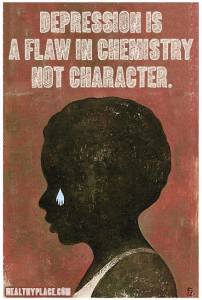
Depression is not a character flaw. It is caused by genetic, biological, social and environmental factors. Dr. Daniela Schreier, a clinical psychologist in Chicago wrote, “Severe depression is not like catching a cold or having a bad day, it gradually gets worse over a lifetime if not treated. It’s not something you can shake off, you learn to manage it.”

A recent survey in the United States by the National Mental Health Association reported 43% of Americans believe depression is a result of a weak will or a deficit in one’s character. This misconception about depression can cause insensitivity and add to the pain experienced by the depressed person. Can you imagine how it feels to be told to “suck it up” “get over it” or “just smile”? For people already experiencing deep pain, hopelessness and isolation, these comments would drive them further into the darkness. Would you tell a person with cancer or diabetes to “suck it up” or “just smile”? No. Treat a depressed person with the same respect and concern you would extend to someone suffering from cancer or diabetes.

Helping a Depressed Person

  1. Encourage them to get help. The most effective treatment is a combination of anti-depressant drugs and therapy.
  2. Be direct. Ask if they’re considering suicide. Take them to the hospital if they are suicidal or having hallucinations or delusions.
  3. Listen and provide a shoulder to cry on.
  4. Be patient. People with depression aren’t lazy. Everyday activities like cleaning house, cooking, or laundry can seem overwhelming.
  5. Educate yourself. There are numerous sites on the Internet where you can learn about depression.
  6. Take care of yourself. Feeling angry or frustrated is normal. Find a support group, friend or therapist to voice your feelings.

Moving Out of Depression                                                                                                                          Adapted from www.Healthyplace.com

  1. Set daily achievable goals to feel a sense of accomplishment.
  2. Schedule activities in a calendar to give you structure and a reason to wake up.
  3. Focus on your good qualities. Write a list of your positive attributes.
  4. Refuse the negative thoughts and replace with positive affirmations such as “I am overcoming this” and “I am in control and moving forward.”
  5. Talk to family, friends and/or a counsellor.
  6. Take short trips outside the house to reduce isolation.
  7. When negative thoughts come, find activities that will distract you.
  8. Go for a walk even if it’s just around the block.
  9. Connect with people you love and trust.
  10. Volunteer as it will give you a sense of purpose.

If you’re suffering from depression, seeking and accepting help is a sign of strength. Take back your life. Contact Wendy Rhyason Counsellor & Life Coach in Edmonton, AB at wendy@wrhyason.ca or 780-289-8235.

*Source: adapted from Family Friend Poems.


Filed Under: Depression Tagged With: depression

  • « Previous Page
  • 1
  • 2
  • 3

Copyright © 2026 · Lifestyle Pro Theme on Genesis Framework · WordPress · Log in