• Home
  • About
  • Services
  • Rate, Hours & Location
  • Contact

Wendy S. Rhyason, MA Counselling Psychology

Counsellor & Life Coach

Forgiveness

February 10, 2015 by Wendy Rhyason

Reclaiming Your Personal Power

As a counsellor I have seen many people struggle with bitterness and resentment. One of the most dangerous things a person can do is to hold onto these emotions.  Clinging to bitterness and resentment has far-reaching and often unexpected consequences.  These emotions impact the mind and spirit, and affect people physically.

Unforgiveness Can Cause Health Problems

When people are bitter, they live with tension and anxiety which affects everything from muscles to chemical balance in the brain.  Over time, the body is weakened. Writing in the journal Social Psychiatry and Psychiatric Epidemiology in 2010, researchers reported that those who held grudges had higher rates of heart disease and cardiac arrest, elevated blood pressure, stomach ulcers, arthritis, back problems, headaches, and chronic pain than those who didn’t share this tendency.  When you dwell on grudges, the stress you carry damages the body and may compromise your immune system, making you less resistant to illness.  Forgiving and releasing anger toward people that have hurt you is the course of action recommended by most psychologists.

Sometimes it is very hard to forgive because we naturally want revenge for the things we have suffered.  Forgiveness seems to go against our sense of what is right and fair.  So we hold on to our anger, punishing people over and over again in our minds for the pain they’ve caused us.  Unfortunately, as long as you refuse to forgive, you are still hooked to that person and you are chained to your past, bound up in your bitterness.

Forgiveness Does Not Mean Forgetting

Many people fail to forgive because they don’t understand what it really means.  When you forgive, you do not gloss over or deny the seriousness of an offense against you.  Forgiveness does not mean forgetting, nor does it mean condoning or excusing offenses.  Though forgiveness can help repair a damaged relationship, it doesn’t obligate you to reconcile with the person who harmed you, or release them from legal accountability.  Forgiveness is a conscious, deliberate decision to release feelings of resentment or vengeance toward a person or group who has harmed you, regardless of whether they actually deserve your forgiveness.

Benefits of Forgivenessforgivenss
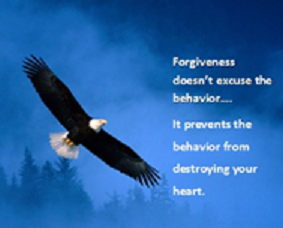
Research over the past few decades has revealed enormous personal benefits to forgiveness. According to that research, forgiveness will:

  •  Make you happier
  • Improve your health.
  • Benefit you spiritually and emotionally.
  • Bring peace of mind and free you from corrosive anger.

While there is some debate over whether true forgiveness requires positive feelings toward the offender, experts agree that it at least involves letting go of deeply held negative feelings.  It empowers you to recognize the pain you suffered without letting that pain define you, enabling you to heal and move on with your life.

Don’t wait until you feel like forgiving. It will never happen.  Living a full, healthy life is the best revenge.  Instead of focusing on your wounded feelings, which gives power to the person who caused you pain, make a choice to forgive and reclaim your personal power.

If you need help with forgiveness, please contact Edmonton Counsellor & Life Coach Wendy Rhyason at wendy@wrhyason.ca or phone or text 780-289-8235.

————————————————————————————————————–

Edmonton Counsellor & Life Coach – Wendy Rhyason, MA Counselling Psychology
Filed Under: Bitterness, Forgiveness, Resentment, Unforgiveness

Making Assumptions

February 7, 2015 by Wendy Rhyason

Edmonton Counsellor & Life Coach – Wendy Rhyason, MA Counselling Psychology
sadAre you disliked by a person you barely know?  Is someone angry with you and you don’t know why?  Are you confused because one of your friends or co-workers is suddenly distant or cold?  If you’ve experienced these situations, it is likely an assumption has been made and something you said or did was interpreted as negative and/or hurtful.

We all make assumptions throughout the day about what is happening in the world around us. You see backup lights on a vehicle and assume the person wants to back out of their parking space.  Lights on in a store would cause you to assume the place is open.  Both are reasonable assumptions.  But when you make assumptions based on emotions, without checking its validity, you can cause unnecessary conflict and emotional pain.

Many conflict situations are caused by people misunderstanding a comment or action and assuming they know the other person’s motives.  Because intentions are invisible, we usually infer them from how we are affected.  When you experience strong emotions, your judgment can be clouded and cause you to make quick and inaccurate assumptions.  When the comments or actions come from a person you don’t know well, you will often decide the intentions are bad.  Making an assumption without checking its validity, puts you in the role of judge and jury, convicting a person without any evidence.

Put Assumptions on Trial

Resist making instant negative assumptions in the moment.  Instead, put your assumptions on trial.  For example, when a person makes a comment and you feel personally attacked, ask yourself if there’s another possibility.  Could she just be making a helpful suggestion?  Your boss decides to give a project to a co-worker and you assume she doesn’t trust you.  Is it possible she thought you had too much on your plate and was trying to relieve some pressure?  Before jumping to conclusions, ask the following questions:

  • What am I feeling?
  • What is the assumption I am making?
  • How do I know my assumption is true?
  • Could there be another explanation?

For someone you know well, does your assumption fit with the usual character and patterns of this person?  For example, if an individual makes a comment and you feel it was a put down, think about whether this person generally puts others down.  If not, it’s very likely you have misunderstood.  Check with the person and avoid the pain of a strained relationship.

Resist the temptation to assume the intentions of others.  We all tend to assume the worst when we are unsure.  To find out the truth about someone’s intentions, ask the person to clarify what happened.  If you can’t do that right away, hold off judgment until you’ve had a chance to talk.  Distrust your ability to read minds and to know what is going on inside someone’s heart.  Clarify.  Ask questions.  Talk it through.  You will save yourself and others a lot of unnecessary pain.

If you need help resolving conflict or improving relationships skills, contact Edmonton Counsellor & Life Coach Wendy Rhyason at wendy@wrhyason.ca or phone or text 780-289-8235.


Edmonton Counsellor & Life Coach Wendy Rhyason, MA Counselling Psychology
Filed Under: Assumptions, Conflict

Unhealthy Relationship Quiz

February 6, 2015 by Wendy Rhyason

Edmonton Counsellor & Life Coach – Wendy Rhyason, MA Counselling Psychologyscience_questioning

How did I end up in another bad relationship? Why do I keep choosing the wrong partner or friend? Have you asked yourself these questions? Do certain patterns keep popping up in your relationships? Without realizing it, most of us follow distinct patterns that are often learned in childhood and we will continue to repeat them unless they are identified and changes are made.

As a child, my mother had an undiagnosed personality disorder and her mental illness created an unsafe, volatile and chaotic home. This left me and my sister with deep emotional scars. Children in abusive dysfunctional homes believe their experience is normal and they learn to imitate the behaviours witnessed. When I became an adult I realized that my upbringing was not normal or healthy and I had been influenced by what I experienced. Determined to break free of destructive patterns, I worked with a therapist over several years to recognize unhealthy relationships and change my behaviour.

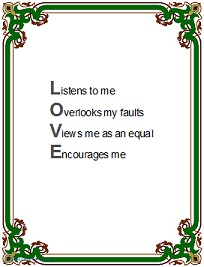
Although making changes wasn’t easy, I have benefited both personally and professionally. As a counsellor, I can teach clients what I learned about identifying unhealthy behaviour and ending destructive patterns. In my personal life, I have healthy, nurturing relationships and boundaries that eliminate the drama and chaos associated with unhealthy behaviour.LOVE

[slickquiz id=1]

Edmonton Counsellor & Life Coach Wendy Rhyason, MA Counselling Psychology
Filed Under: Healthy Relationships, Unhealthy Relationships

Buried Alive?

February 2, 2015 by Wendy Rhyason

Wendy Rhyason Edmonton Counsellor & Life Coach

——————————————————-

Emotions – enemy or friend?

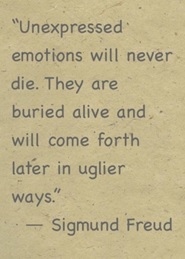
Emotions. Are they your enemy or your friend? Do you acknowledge your emotions or do you bury them?  When you bury emotions they are not dead, but very much alive and they are affecting you in ways you probably don’t realize.

Many people want to avoid their feelings for fear of losing control or experiencing the associated pain.  To avoid the emotions, people will get busy, exercise more, use addictive substances, or just pretend it has not happened.  This may seem effective at the time but burying emotions affects your physical and mental well-being.  When you ignore, dismiss or repress emotions, you can exacerbate many serious illnesses such as cannexpressed emotionscer, arthritis, and many types of chronic pain.

Many people think if a painful memory or emotion isn’t in their thoughts daily then it has been dealt with. However, if you buried the emotion or memory rather than working through it, it will affect your thinking, actions and reactions to situations.  A person that has buried emotions will explode in anger at something that seems relatively trivial and harmless.  It is similar to a volcano that builds up pressure until it finally erupts.  The person cannot control or repress the emotions any longer and it begins to leak out in harmful and unhealthy ways.  Other symptoms of buried or repressed emotions are:

  • Fatigue
  • Depression or anxiety
  • Addiction
  • Rarely talking about your feelings
  • Troubled personal relationships with family, friends, acquaintances
  • Difficulty accepting yourself and others

Emotions are an Effective Teacher

Emotions are reliable indicators of what is really going on inside of you.  Painful or negative feelings indicate unmet needs, or you are interpreting reality through a harmful thinking pattern (eg. “I never do anything right.” “Everyone is always against me.” etc.).  Positive feelings indicate your needs are being met and you are experiencing healthy attitudes and actions.  Emotions are an effective teacher if you listen to them.

How to Feel and Deal with Emotions

You can learn how to feel and deal with your emotions instead of burying them and experiencing the negative consequences.  When an emotion of any type emerges:

  1. Tune into the specific physical experience of the emotion. Do I have a knot in my stomach? Does my throat feel tight?
  2. Name the emotion. Is it anger? Is it fear? Is it grief?
  3. Determine the cause. Why am I feeling this way? What thoughts are going through my mind?
  4. Feel the emotion. Find a safe place to experience the emotion. If you are sad, allow yourself to cry. If you are angry, express it in a non-destructive way and allow it to dissipate.
  5. Evaluate what can be learned and/or needs to be changed. Is there a thinking pattern that is harmful to me?  Am I seeing things clearly or am I being influenced by my past?
  6. Determine action What needs to change? Do I need to work through these emotions at a deeper level?

This process may be very difficult for you.  However, you can learn the skills to identify, feel, and evaluate emotions and it is worth your time and effort.  Being strongly connected to your emotions is essential to having a full and satisfying life.

If you need help with emotions, please contact Wendy Rhyason Edmonton Counsellor & Life Coach at wendy@wrhyason.ca or text or call 780-289-8235.

Filed Under: Buried feelings, Unexpressed emotions Tagged With: buried emotions, unexpressed emotions

The Pain of Betrayal

February 1, 2015 by Wendy Rhyason

Wendy S Rhyason – Edmonton Counsellor & Life Coach

————————————————————————

You placed your trust in someone and you discovered the person was untrustworthy. You were betrayed. The pain of betrayal is deep and can be devastating. Dr. Borri (2009) wrote, “Betrayal is an interpersonal trauma which shatters assumptions about how we view life and the people close to us.”  When you are betrayed, your reality has been shattered and you feel numb, out of control and victimized.

Recently I experienced a very painful betrayal by a friend and it left me wondering if I ever want to trust anyone again. At first I admonished myself for being so trusting. I am trained to pick up on deception and yet I missed the signs she was untrustworthy. Or did I? There were numerous signs throughout our friendship but I ignored them. I saw the signs but I really liked her and wanted to believe she was the “true” friend she portrayed herself to be.  In the end she made false accusations against me for her own personal gain and I was forced to accept the truth.  I was crushed when I realized she was not the person I thought she was. Her betrayal left me shaken and confused.

As a counsellor, we are advised to have our own counsellor so we can continue to grow and learn from these type of experiences. I worked through this with my counsellor and have gained some insight that I want to share.  The purpose in sharing is not to disparage this person. We all have areas where we need to grow. We all have betrayed another person at some point in our lives. What she did was wrong but hopefully one day she will see the pain she caused and change her behavior so she can have integrity and healthy relationships. I want the best for her but we are no longer friends.

Red Flags for Untrustworthy Peoplered flag

This painful event taught me some very valuable lessons.  Whether you are the betrayer or the one that has been betrayed, there is a lesson to be learned.  I hope you will take what I’ve learned and make any needed changes so you can have healthier relationships.

These are the red flags that appeared in our two-year friendship:

  1. Saying critical things about her other friends but acting pleasant to their face.
  2. Saying one thing to me and something different to others; telling each person what she thought they wanted to hear.
  3. Engaged in conversation when the subject was her life. Pretending to listen but zoning out when it was about someone else.
  4. Contradicting previous conversations and covering up with a response that did not ring true.
  5. Presenting herself as compassionate and caring but words and actions were often harsh and uncaring.

Do you recognize any of these red flags in your friendships? Hindsight they say is 20/20.  Looking back, these red flags were obvious. But why didn’t I acknowledge them? I told myself I was being too sensitive, that I had misread the situation. I gave her the benefit of the doubt over and over again. I had a sense several times that she wasn’t who she portrayed. My intuition warned me, but I failed to listen. I wanted her to be the person she pretended to be. I wanted to have a close supportive friendship. I wanted her to be trustworthy. But in failing to heed the red flags, I placed my trust in a person that was not trustworthy and I was betrayed.

The good news is that 75% of all betrayal has advance warning signs (Borri, 2009). But when we fail to respond to red flags, we will always feel the pain of betrayal.  If you sense something is wrong despite appearances or explanations, take notice. When you catch your friend lying, take notice.  If your friend gossips about others while acting like their friend when face-to-face, take notice.  If your friend says one thing and does another, take notice. If your friend’s opinion and words change depending on who he/she is talking to, take notice. If you friend says one thing and does another, take notice. If your friend pretends to be interested in your life, take notice. These red flags are screaming out to you – this person is not trustworthy!

Red Flags mean STOP

Choose your friends wisely. Your trust is precious. Only give it to people you know are trustworthy.  Be careful to listen to your inner voice and learn about the behavior of untrustworthy people. You will minimize the instances of betrayal and you will have more authentic relationships that are true, nourishing, and healthy.  For more information on trustworthy vs untrustworthy people http://www.lifehack.org/articles/communication/10-things-trustworthy-people-dont.html

For help with healing from betrayal or to sharpen your skills to recognize untrustworthy people contact Wendy Rhyason Counsellor & Life Coach in Edmonton, AB at wendy@wrhyason.ca or 780-289-8235.

References:

Biali, S. (2011) Relationship red flags: Are you ignoring them? Psychology Today. Retrieved from https://www.psychologytoday.com/blog/prescriptions-life/201107/relationship-red-flags-are-you-ignoring-them

Borri, E. R. (2009). So you’ve been betrayed: 7 steps on how to survive betrayal. Retrieved from https://realisticrecovery.wordpress.com/2009/05/22/so-you%E2%80%99ve-been-betrayed-%E2%80%93-7-steps-on-how-to-survive-betrayal/


Filed Under: Betrayal, Mistakes and growth Tagged With: Betrayal, untrustworthy people

  • « Previous Page
  • 1
  • 2
  • 3
  • Next Page »

Copyright © 2026 · Lifestyle Pro Theme on Genesis Framework · WordPress · Log in