• Home
  • About
  • Services
  • Rate, Hours & Location
  • Contact

Wendy S. Rhyason, MA Counselling Psychology

Counsellor & Life Coach

Blaming Others

March 3, 2015 by Wendy Rhyason


Why do some people blame others instead of accepting responsibility for their actions? blame
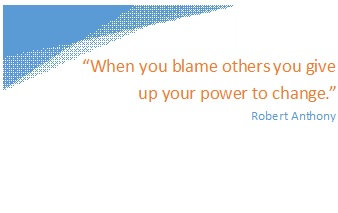
If you have trouble accepting responsibility or are the object of someone’s unjustified blame, it may help you to understand the dynamics behind this behaviour. Some of the reasons people blame others:

  1. They feel out of control. Unable to handle the fear of being out of control and helpless in a situation, people will restore their sense of control by blaming others. By blaming others the helpless person assumes the position of the accuser and feels more in control.
  2. Did not learn to take responsibility for actions. Some parents fail to teach their children how to take responsibility for their actions.  When they grow up, they blame others whenever something bad happens.
  3. Unable to admit failure or mistakes. People that cannot accept they are imperfect will blame others to avoid responsibility.  Being flawed or imperfect is interpreted as having no self-worth accompanied by feelings of shame.
  4. Unable to accept what happened. To avoid accepting that something has changed, people will blame others.

When people fail to take personal responsibility for failures and mistakes, the road to constructive change is blocked.  Dr. Elliot Cohen wrote, “While people are not perfect they can learn from their mistakes—but only if they admit them and change their behavior in the future” (2012).

Life is about learning.  Instead of looking at mistakes or failures as negative and shifting blame, look at them as opportunities to learn new things or sharpen your skills.  When a child starts school, do you expect the child to already know how to read and write?  No, you expect the child to learn and eventually grow in his or her abilities.  It is the same with adults.  You weren’t born with the knowledge to have a successful relationship, be a good employee, or raise healthy children (for example).  These are things you learn and you will make mistakes along the way.

Avoiding Responsibility

If you blame others to avoid responsibility, give yourself a break and let go of your need to be perfect.  Making mistakes or failing says nothing negative about who you are.  You are human and we all make mistakes.  Learn from them.  When you take responsibility for your life and accept that it is ok to be imperfect, you will find more peace and happiness and begin to grow mentally and spiritually.

If you are the object of blame, refuse to accept the blame for situations you were not personally responsible for.  Carrying other people’s responsibilities is a heavy load that can lead to depression and anxiety.  As well, by accepting the other person’s responsibility you are robbing them of the opportunity to solve their problems and learn from their mistakes.  Instead, help the blamer accept their imperfections and provide support and encouragement to learn from mistakes.

If you need help learning how to turn mistakes and failures into opportunities to learn, contact Edmonton Counsellor & Life Coach Wendy Rhyason at wendy@wrhyason.ca or phone or text 780-289-8235.

Edmonton Counsellor & Life Coach – Wendy Rhyason, MA Counselling Psychology

 

Filed Under: Blame, low self esteem, Mistakes and growth, Perfectionism

Who Can You Trust?

February 23, 2015 by Wendy Rhyason

When you grow up in an abusive home you learn destructive relationship patterns. You may find it hard to trust others because you have been betrayed and hurt deeply by the people you cared about. With all relationships there is the risk of betrayal, but you can minimize the pain by remembering the characteristics of trustworthy people and carefully choosing the people you allow into your inner circle.

Characteristics of trustworthy people

Admit weaknesses – Being honest, open and vulnerable is essential in a trusting relationship. If the person focuses on your weaknesses, this is an attempt to feel superior.

Spiritual instead of “religious” – People that are stuck on rules as the core of their spirituality, are avoiding their own issues and will never deal with them.

Non-defensive – trustworthy people are open to feedback, especially from people who love them. An angry response indicates an unwillingness to take responsibility for actions.

Humble and not self-righteous – trustworthy people recognize their own faults and do not see themselves as better than others.

Willing to apologize and change behavior – trustworthy people recognize their mistakes, apologize and are willing to change their behavior because they want to improve themselves and their relationships.

Take responsibility for their problems – trustworthy people admit their problems and take steps to deal with them. Blaming others for problems, a lack of empathy, fault finding and a failure to forgive others are signs of an untrustworthy person.

Sincerely compliment rather than flatter – A trustworthy person will be honest with you and won’t point out your good characteristics as a form of manipulation.

Willing to earn trust instead of demanding it – Trustworthy people recognize that trust is built over time and grows when there is repeated and consistent caring behavior.

Are honest and avoid lying – Trustworthy people work at being honest.  Untrustworthy people will often lie to deal with their problems.

Interested in personal growth – Trustworthy people recognize we all have areas we need to change and improve.  Blaming others, being defensive and refusing to change keeps a person at the same emotional level throughout life.

If you are like me, you want to trust everyone. But it is wise to watch a person’s actions, not their words. Listen to your instincts. Trust is earned, not demanded. It is a gift we give others and it grows over time as you see the consistent characteristics of trustworthy behavior.

If you find you have many of the characteristics of an untrustworthy person, you can change.  For help changing behavior, feeling safe in relationships or healing from the hurt of betrayal, please contact me at wendy@wrhyason.ca or (780) 289-8235.

Reference:

Cloud, H. & Townsend, J. (2009). Safe people. Grand Rapids, Michigan:Zondervan


Edmonton Counsellor & Life Coach – Wendy S. Rhyason, MA Counselling Psychology

Filed Under: Betryal, Healthy Relationships, Mistakes and growth Tagged With: Safety in relationships, Trust

Shame on You?

February 22, 2015 by Wendy Rhyason

Guilt and shame go hand-in-hand.  Like guilt, shame is a necessary human emotion as it helps us develop a moral compass.  When we feel guilt and shame it is because we have done something wrong that goes against our core values and beliefs.  Guilt and shame are positive responses of psychologically healthy people when they realize they have done something wrong. These emotions lead to a correction and change in behaviour.

Toxic shame on the other hand is the feeling of being something wrong.  It causes us to feel flawed and defective and therefore unworthy of love and belonging.  Toxic shame covers an internal state of inadequacy, unworthiness, or regret.  It erodes the sense of self and tends to direct people into destructive behaviours.  Feelings of toxic shame produce anger, rage or other irrational behaviours.  Fearing rejection, individuals become perfectionists, withdraw from people, seek the approval of others and become overly responsible.  Toxic shame is often the experience that underlies violent acts, addiction, infidelity, eating disorders, excessive dependency in relationships, and so many other problematic behaviors.

Cost of Shameshame

As children we develop an internalized view of ourselves as adequate or inadequate.  If children are continually criticized, severely punished, neglected, abandoned, abused or mistreated, they begin to think of themselves as inadequate, inferior or unworthy.  Feelings of inferiority contribute to low self-esteem leading to over sensitivity and a fear of rejection.  This is a common emotional response in adult children of alcoholic parents, as well as those who grew up with depressed parents, abuse, religious fanaticism, war, cultural oppression, or adult or sibling death.  All of these experiences cause an individual to feel vulnerable, helpless and shamed.

Toxic shame can be triggered by another person or a circumstance and from a failure to meet your own unrealistic ideals or standards.  The first step to healing toxic shame is to recognize the feelings of shame in your life.  The following statements contribute to a sense of shame and can be spoken by another person or you can say them to yourself:

That was so stupid. I can’t believe you said that!

You will never amount to anything!

Who would want to be with you! You’re ugly and disgusting!

You’ll never be as good as your friends! You’re such a loser!

Can you see how statements like this erode your self-worth and lead to a sense of shame?  Are you shaming yourself?  Are there people in your life that shame you?  If someone else makes these statements, it may be necessary to separate yourself from that relationship. If you make these statements, learn self-compassion.  Don’t judge yourself or allow others to judge you. Don’t blame yourself for situations you are not responsible for. Get to know yourself and accept who you are. Forgive yourself and others.  Love, respect and protect yourself. Practice compassion. Eventually you will reduce your feelings of shame and increase your self-worth.

If you need help reducing feelings of shame and increasing your self-worth, please contact Edmonton Counsellor & Life Coach Wendy Rhyason at wendy@wrhyason.ca or phone or text 780-289-8235.


Edmonton Counsellor & Life Coach – Wendy Rhyason, MA Counselling Psychology
 

Filed Under: destructive behaviours, low self esteem, shame, toxic shame

Price of Gossip

February 18, 2015 by Wendy Rhyason

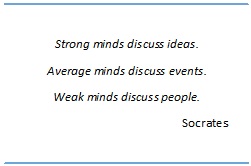
Have you ever been the subject of gossip? Gossip is idle talk or a rumor that is discussed without consideration or thought to the potential negative effects upon the person being discussed.  Often the person gossiping does so without thinking about the negative effect they might have on others. There are various reasons why people gossip:

  • a need to fit instrong
  • a need to vent or validate their perspective
  • a need to feel superior
  • a need to say they have been wronged
  • a need to get support, or rally spectators
  • for fun or excitement
  • a need to avoid conflict or avoid resolution

All of these reasons to gossip are destructive to relationships and to you personally. Before you gossip consider these consequences:

  1.  YOU REAP WHAT YOU SOW – If you’re gossiping about someone else, you can rest assured that, at some point, someone will also gossip about you.
  1. IT ISOLATES YOU – Ultimately, gossiping will isolate you. People will still talk to you and you’ll still have friends, but you’ll be known as the person that gossips.
  1. NO ONE TRUSTS YOU – No one is going to trust you. Even your best friends might hesitate before sharing anything serious with you, especially if they fear you’ll gossip about it.
  1. YOU HURT OTHERS – One of the worst effects of gossip is the pain it causes others. Put yourself in their place, and remember a time when you’ve been hurt by gossip.
  1. IT TARNISHES YOUR INTEGRITY – When you gossip your integrity is tarnished. People definitely won’t trust you, they’ll certainly be hurt by your actions, and those you love may even have difficulty believing anything you say.
  1. IT SPREADS LIES – Many times, a story gets exaggerated entirely out of proportion. By gossiping and spreading the rumor, you’re lying as well.

Gossip Destroys Relationships

If you’ve ever been the target of gossip and untrue rumors, you know how hurtful it is. Whether something is true or not, knowing that people are talking about you is painful. You feel embarrassed, humiliated, and ashamed, even if you’ve done nothing to be ashamed of in the first place. Does that mean you can never discuss another person with others? No, but be very careful of your motives. When you are talking about another person but not gossiping, there is an effort to understand and maintain the other person’s wellbeing and integrity. A good measure is to ask yourself – if the person walked into the middle of this conversation would there be any embarrassment about what is being discussed?

Gossip is harmful and destroys relationships.  When you are tempted to gossip about others, remember the pain you felt when people gossiped about you. Remind yourself about the cost to you personally if you engage in gossip. Refuse to participate in something that tears other people down.

To learn less hurtful and more effective ways to express your feelings or if you are the subject of gossip, I am here to help you deal with your emotions.  Please contact Edmonton Counsellor & Life Coach Wendy Rhyason at wendy@wrhyason.ca or phone or text 780-289-8235.

Edmonton Counsellor & Life Coach – Wendy Rhyason, MA Counselling Psychology
Filed Under: Betryal, Gossip, Unforgiveness, Unhealthy Relationships

Self-Talk

February 14, 2015 by Wendy Rhyason

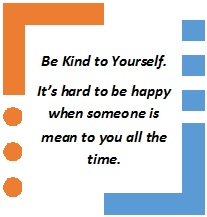
As we go throughout our day, we all have internal conversations that provide opinions and evaluations on what we are doing. This inner monologue is called “self-talk.” When your self-talk is positive and self-validating, the results can boost your productivity. However, when the voice is critical and harsh, the effect can be emotionally crippling.

be kindI grew up with parents that had extremely high standards and were very critical. I tried hard to meet their expectations but I never measured up and the continual criticism shaped how I viewed myself. Years later when seeing a therapist to deal with issues from my past, I realized that I had taken over their role as critic and held myself to impossible standards. This revelation opened the door to make changes to my self-talk that were life changing.

Striving to Reach Impossibly High Standards

If you grew up with critical parents, teachers or others, you too may have come to believe many negative things about yourself and you may be striving to reach impossibly high standards. When you are harsh, unkind and critical of yourself the affect is dramatic. Psychologist Dr. T.E. Chansky, author of Freeing Yourself From Anxiety explained that studies show negative self-talk is associated with low self-esteem, perfectionism, higher stress levels and even depression.

What do you say to yourself when you’ve made a mistake or have done something embarrassing? Do you tell yourself “that was stupid” “I’m such an idiot?” “What’s wrong with me?” or “Why can’t I do anything right?” This type of self-talk is destructive and causes you to question yourself so you can become paralyzed with doubt and uncertainty. If a friend did something embarrassing or made a mistake, would you be critical or supportive? Do you treat yourself with the same level of grace, encouragement and forgiveness that you extend to others?

You Can Change Negative Self-Talk

Negative self-talk is a habit and the good news is you can change it to be positive, and encouraging. The first step toward change is to recognize what you are saying to yourself. Pay attention to your inner voice as you go throughout your day. Note what you say, either out loud or in your mind. You may be surprised at what you discover.

Once you begin to recognize negative self-talk, change the voice by choosing to focus on the things you do well. What are your strengths? Are you a good friend? Do you have a lot of inner strength? Are you a survivor? If you are a Christian, look in the Bible for all the verses that speak of your value in God’s eyes. Write these statements down and when you become self-critical remind yourself of the positive. With practice, you will eventually replace your critical voice with one that is more supportive. Speaking from personal experience and from what I’ve observed when counselling clients, becoming your own friend and cheerleader changes your negative self-concept, reduces anxiety, builds confidence and promotes inner peace.

Are you struggling with critical self-talk? Replace the critical voice with one that is encouraging, supportive and forgiving. Remember, if you wouldn’t say it to your friend, don’t say it to yourself.

There are a lot of excellent resources available on changing self-talk. Google “changing negative self talk” or for help changing to positive self-talk contact Edmonton Counsellor & Life Coach Wendy Rhyason at wendy@wrhyason.ca or phone or text 780-289-8235.

Filed Under: self-talk

  • 1
  • 2
  • 3
  • Next Page »

Copyright © 2026 · Lifestyle Pro Theme on Genesis Framework · WordPress · Log in